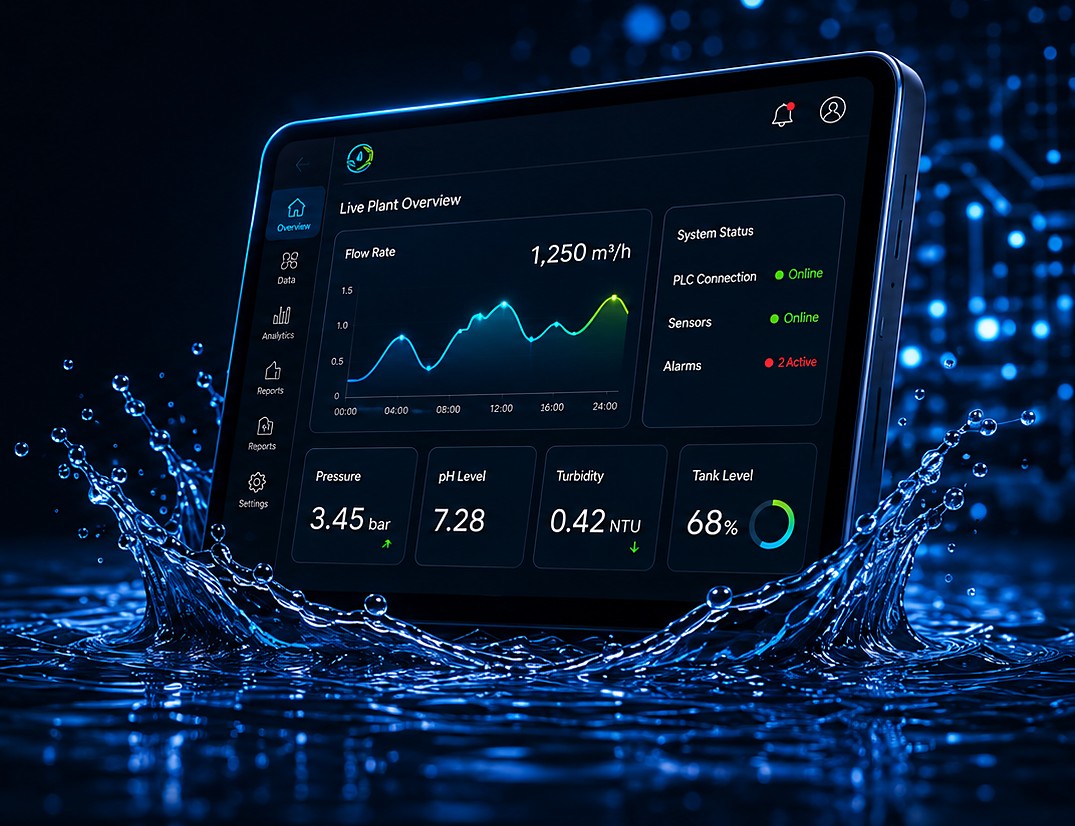
Most plant problems are visible in the data well before they become incidents. A turbidity creep, a pump drawing more current than usual, a backwash that did not run. FlowSense watches for these continuously and tells the right person while there is still time to act.
Thresholds are set per asset rather than globally, because what is normal for one clarifier is not normal for another. Each alert carries severity, so a filter approaching its limit does not arrive looking identical to a pump that has stopped.
What triggers an alert
- Threshold breaches — a value crossing its configured high or low limit, with separate warning and critical bands.
- Rate-of-change — a reading moving faster than it should, which often catches a developing fault before an absolute limit is reached.
- Equipment faults — a pump that fails to start, a blower tripping, a valve that does not reach position.
- Communication loss — a PLC or sensor that stops responding, so a silent failure is never mistaken for a healthy plant.
- Missed cycles — a backwash, dose or scheduled routine that did not run when it should have.
Getting to the right person
Alerts are routed by severity and by who is on shift, so a routine warning does not wake someone at 02:00 while a genuine fault reaches them immediately. Each one is acknowledged and closed with a record of who responded and what they did, which becomes useful history when the same fault recurs.
Alarm fatigue is a real operational risk — an operator who receives forty notifications a day stops reading them. Thresholds and escalation are tuned during commissioning so that an alert arriving means something genuinely needs attention.
- Trigger types
- Threshold, rate, fault, comms
- Severity
- Warning and critical
- Routing
- By severity and shift
- Closure
- Acknowledged and logged